

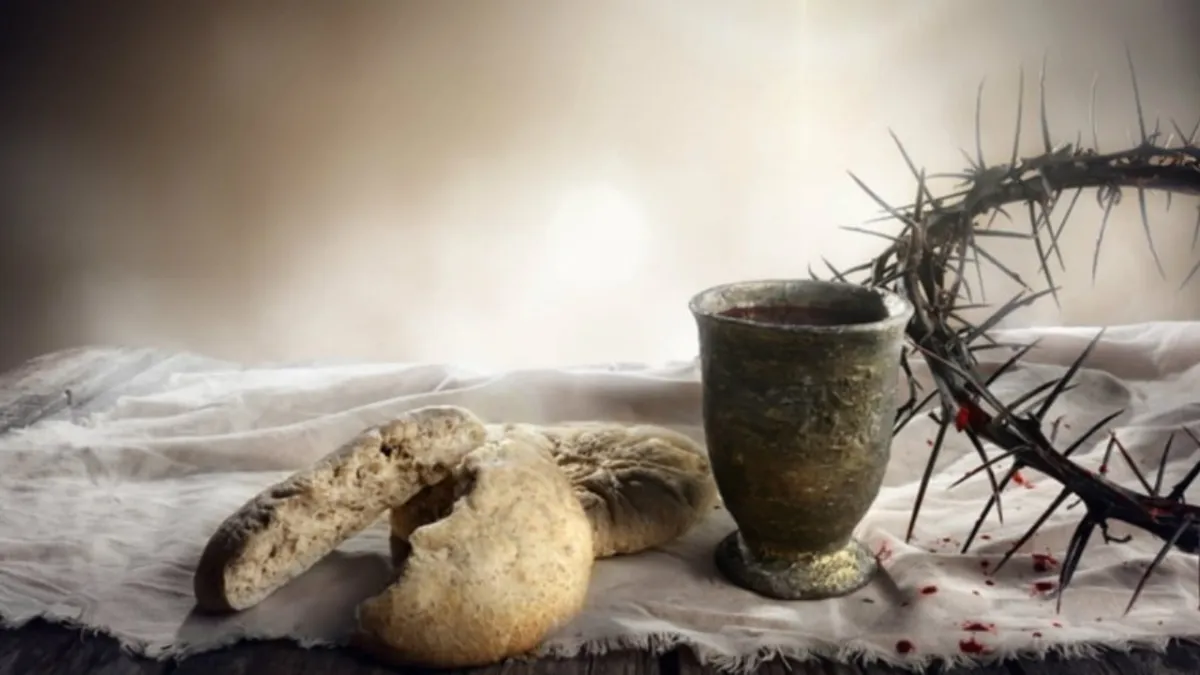
At The Table
What the Last Supper Teaches Us About Easter
As Easter approaches, many of us naturally turn our attention to the empty tomb—the victory, the celebration, the hope of resurrection. But before the resurrection morning, there was a table. Before the triumph, there was a quiet, intentional moment shared between Jesus and His disciples: the Last Supper.
For executive pastors and church leaders, this moment is more than an historical event—it’s a theological anchor and a leadership model. The Last Supper doesn’t just prepare us for Easter; it teaches us how to understand it.
1. The Last Supper Reveals the Meaning Behind the Cross
Jesus didn’t leave His followers to interpret His death on their own. In the upper room, He gave them a framework.
Breaking the bread, He said, “This is my body, given for you.” Lifting the cup, He explained, “This is my blood… poured out for many.”
In other words, the cross was not an accident—it was an offering.
The Last Supper teaches us that Jesus’ death was:
Substitutionary — He gave His body for us
Intentional — This was always the plan, not a reaction
Personal — “For you” makes it deeply individual
As leaders, this reminds us that the message of Easter isn’t just that Jesus died—but why He died. Our role is to help people connect the dots between the table and the cross.
2. The Table Shows Us the Cost of Covenant
The language Jesus used during the meal would have been unmistakable to His disciples: covenant language.
“This cup is the new covenant in my blood.”
Covenants in Scripture were binding, costly, and sealed with sacrifice. Jesus was establishing a new relationship between God and humanity—one not based on law, but on grace.
But grace is not cheap.
The Last Supper forces us to wrestle with the weight of what was about to happen:
Betrayal was already in motion
Suffering was imminent
Separation and sacrifice were unavoidable
And yet, Jesus still gave thanks.
For executive pastors, this is a powerful leadership insight: Jesus embraced the cost of His calling before the crowd ever saw the outcome. Easter reminds us that resurrection power is real—but it often comes through seasons of sacrifice.
3. The Meal Points Forward to the Resurrection
It’s easy to view the Last Supper as only looking ahead to the cross—but Jesus also pointed beyond it.
“I will not drink of this fruit of the vine again until I drink it new in the kingdom of God.”
Even in the shadow of death, Jesus spoke of what was coming next.
The resurrection was not an afterthought—it was the fulfillment.
The table becomes a place of tension:
Sorrow and hope
Loss and promise
Death and life
Every time we lead our churches in communion, we step into that same tension. We remember His death, yes—but we also proclaim His victory.
4. The Last Supper Models Intentional Leadership
Jesus chose this moment carefully.
In His final hours, He didn’t withdraw—He gathered. He didn’t rush—He taught. He didn’t focus on logistics—He focused on people.
He washed feet.
He shared meaning.
He prepared hearts.
For executive pastors navigating one of the busiest weeks of the year, this is a needed reminder: Easter isn’t just about execution—it’s about formation.
Amid service planning, volunteer coordination, and growing attendance, we cannot lose sight of what Jesus prioritized in His final moments:
Investing deeply in people
Clarifying the mission
Centering everything on Himself
5. The Invitation Still Stands
Perhaps the most remarkable part of the Last Supper is who was at the table.
Imperfect followers.
Doubters.
Even a betrayer.
And yet, Jesus still extended the bread. Still offered the cup.
This is the heart of Easter: an open invitation.
For our churches, this week is not just about celebrating what Jesus has done—it’s about inviting others to experience it for themselves.
As you lead this Easter, don’t rush past the table on your way to the tomb.
Because it’s at the table that we understand the cross.
It’s at the table that we feel the weight of the sacrifice.
And it’s at the table that we begin to grasp the beauty of the resurrection.
This Easter, may we lead our people not just to celebrate the risen Christ—but to truly understand Him.





Facebook
Instagram
X
LinkedIn
Youtube