

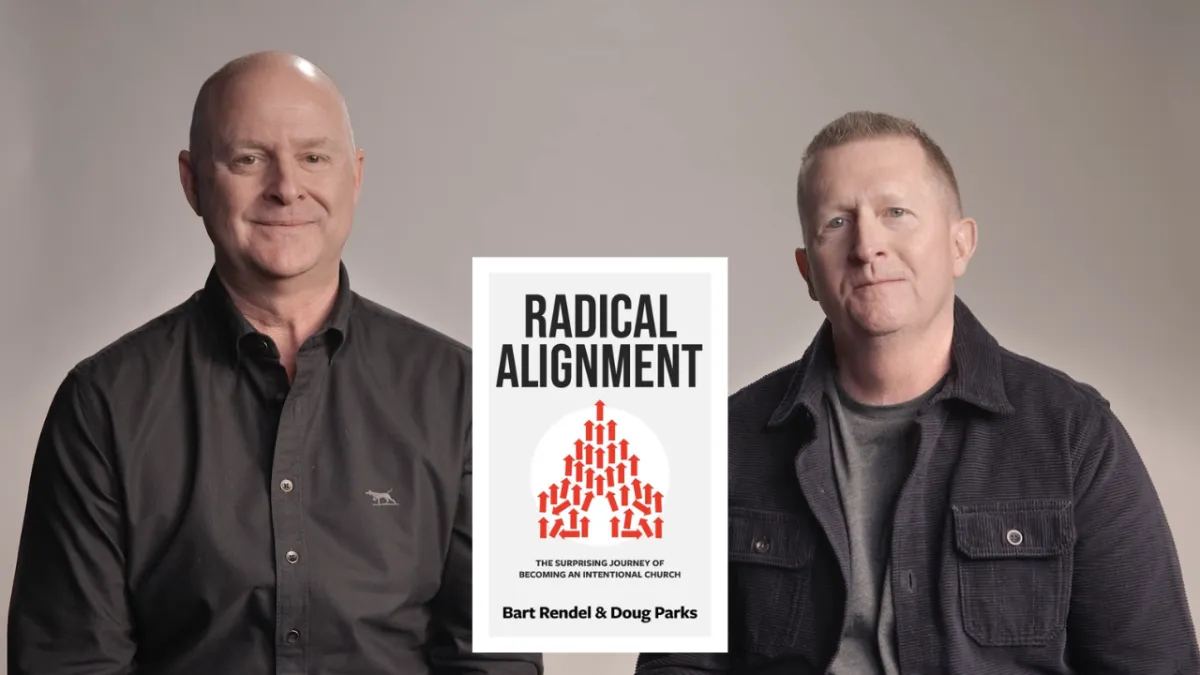
Radical Alignment: A Journey Toward Becoming an Intentional Church
A Book Summary for Executive Pastors
Over the years, several books have shaped the conversation around church leadership and organizational health. Among the most influential in that space is Intentional Churches by Bart Rendel and Doug Parks. Their follow-up book, Radical Alignment: The Surprising Journey of Becoming an Intentional Church, continues that conversation by focusing on what it takes for a church to move from scattered activity to unified mission.
For executive pastors especially, this book speaks directly to the operational and leadership challenges we face every day. The concept at the center of the book—alignment—is something every growing church must wrestle with. When ministries, leaders, and systems are aligned around a clear mission, momentum follows. When they’re not, even the most passionate church can find itself stalled.
In Radical Alignment, Rendel and Parks explore what it really takes to bring a church’s mission, strategy, and culture into alignment.
The Problem: Activity Without Alignment
One of the realities most executive pastors know all too well is that churches rarely suffer from a lack of activity. Instead, the more common problem is misaligned activity.
Programs multiply. Ministries develop their own priorities. Staff members pursue good ideas that may or may not support the church’s central mission.
The result is often predictable:
Staff fatigue
Volunteer burnout
Confused priorities
Limited measurable impact
Rendel and Parks argue that many churches don’t fail because they lack passion or commitment. They struggle because their efforts are not aligned around a common strategy.
That’s where intentional leadership becomes essential.
Alignment Is Not Accidental
The central premise of Radical Alignment is that alignment doesn’t happen naturally. It must be designed, reinforced, and maintained by leadership.
In other words, alignment is a leadership responsibility.
For executive pastors, this observation should resonate immediately. Much of our work sits at the intersection of vision and execution. While the senior pastor often carries primary responsibility for casting vision, the executive pastor plays a critical role in ensuring that the entire organization moves in the same direction.
That’s what Rendel and Parks describe as the journey toward becoming an intentional church.
Intentional churches don’t drift into effectiveness. They build systems, structures, and leadership rhythms that reinforce their mission at every level.
The Journey Toward Radical Alignment
One of the strengths of this book is the way it frames alignment not as a quick fix, but as a journey of organizational transformation.
Churches that pursue radical alignment typically move through several important stages:
1. Clarifying the Mission
Alignment begins with clarity.
Churches must define why they exist and what success looks like. Without that clarity, every ministry leader ends up defining success on their own terms.
Executive pastors often serve as the leaders who help translate mission language into operational reality.
2. Defining a Disciple-Making Strategy
Once the mission is clear, the church must determine how it intends to accomplish that mission.
Rendel and Parks emphasize that churches must move beyond generic mission statements and articulate a specific pathway for discipleship.
What does spiritual growth actually look like in your church?
How do people move from first-time guest to mature follower of Christ?
Alignment begins to take shape when every ministry supports that same pathway.
3. Aligning Ministries to the Strategy
This is where the work often becomes difficult.
Not every existing ministry will fit neatly into the newly defined strategy. Some ministries will need to change. Others may need to be reimagined. Occasionally, some will need to end.
For executive pastors, this stage requires both leadership courage and organizational wisdom.
Alignment isn’t about eliminating ministry. It’s about ensuring that every ministry contributes to the church’s mission.
4. Building Systems That Reinforce the Strategy
Healthy organizations build systems that reinforce their priorities.
These systems include:
Budgeting processes
Staff evaluations
Ministry planning rhythms
Communication strategies
Leadership development pipelines
When these systems are aligned with the church’s mission, they reinforce the strategy instead of competing with it.
This is where executive pastors often play their most significant role.
We build the infrastructure that keeps the mission moving forward.
Culture Matters
One of the key insights in Radical Alignment is that alignment is not only structural. It’s also cultural.
A church may adopt new strategies or systems, but if the leadership culture doesn’t change, the organization will eventually drift back to old habits.
Healthy leadership cultures share several characteristics:
Leaders speak a common language around mission and strategy.
Staff members collaborate rather than compete.
Ministries celebrate shared wins instead of isolated successes.
Leaders are willing to make difficult decisions for the sake of alignment.
In other words, alignment becomes part of the church’s DNA.
Why This Matters for Executive Pastors
Executive pastors often function as the architects of alignment.
We’re the ones asking questions like:
Does this ministry advance our strategy?
Are we measuring the right things?
Are our resources aligned with our priorities?
Are our leaders pulling in the same direction?
Books like Radical Alignment give language and structure to work that many executive pastors are already doing.
They remind us that operational leadership isn’t merely administrative. It’s deeply missional.
When infrastructure, strategy, and culture work together, the church becomes far more effective in accomplishing its mission.
A Personal Note
I’ve had the privilege of knowing Bart Rendel and Doug Parks for many years. I was once a certified coach with the Intentional Churches organization, and I’ve seen firsthand the impact their work has had in churches across the country.
Their first book, Intentional Churches, helped many leaders rethink how ministry strategy should function. Radical Alignment builds on that foundation and pushes the conversation even further.
If you’re an executive pastor—or any church leader responsible for organizational health—this book is well worth your time.
Alignment may not sound glamorous, but when it happens, the results can be transformative.
And in today’s complex ministry environment, intentional alignment may be one of the most important leadership priorities we have.





Facebook
Instagram
X
LinkedIn
Youtube